

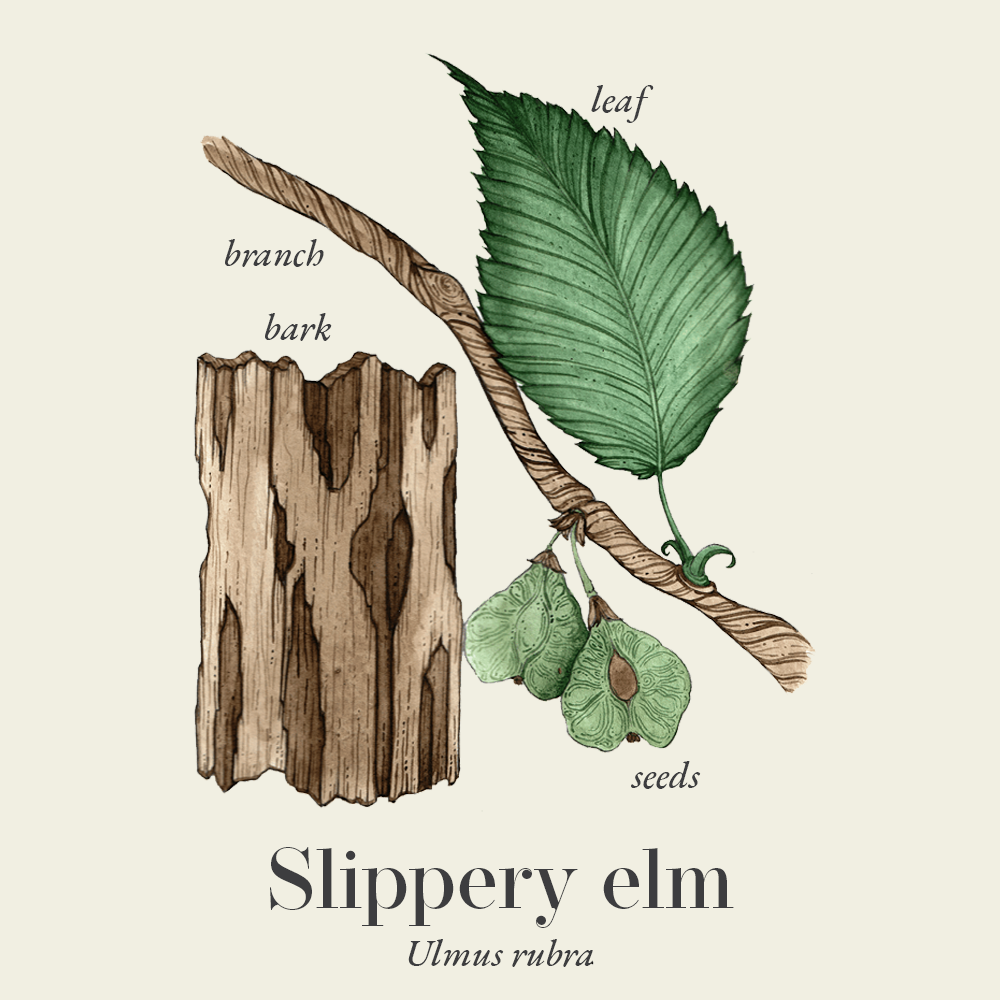
If you've ever mixed slippery elm powder with water, you immediately understand why this herb has been used for generations.
It becomes thick, slippery, and almost gel-like—which is exactly what makes it so useful.
Slippery elm is one of my favorite examples of a demulcent herb, meaning it contains compounds that become soothing and mucilaginous when mixed with water. Traditionally, it has been used to soothe irritated tissues throughout the digestive and respiratory systems.
It's simple, gentle, and incredibly versatile.
What Is Slippery Elm?
Scientific name: Ulmus rubra
Slippery elm is a tree native to North America that traditionally grows in rich, moist soils throughout forests, wooded areas, and riverbanks.
Unlike many medicinal herbs where we use the leaves or flowers, with slippery elm we're interested in the inner bark.
The inner bark contains large amounts of mucilage—a type of soluble fiber that absorbs water and creates a thick, slippery consistency.
And that's where slippery elm gets both its name and many of its traditional uses.
Slippery Elm & Digestive Support
Slippery elm is probably best known for its ability to soothe the digestive tract.
When the powdered inner bark is mixed with liquid, the mucilage creates a gel-like consistency that can feel incredibly soothing to irritated tissues.
Traditionally, slippery elm has been used as part of herbal protocols for digestive complaints involving irritation or discomfort, including:
Occasional heartburn
Stomach irritation
Digestive discomfort
Irritated intestinal tissues
Bowel irregularity
General GI inflammation and irritation
Rather than forcing the digestive system to do something, slippery elm is often used simply to soothe and protect.
This is also why you'll see slippery elm show up in some of the gut-healing products I use and recommend. Both DesBio's Intestinal Restore and Designs for Health GI Revive contain slippery elm as part of their formulas. I like these types of comprehensive products because slippery elm can work alongside other ingredients aimed at soothing and supporting the intestinal lining rather than being used completely on its own.
And sometimes that's exactly what the gut needs.
Slippery Elm for the Throat & Respiratory System
That same mucilage that makes slippery elm wonderful for the digestive tract also makes it helpful for the throat.
This is why you'll often see slippery elm included in natural throat lozenges and herbal cough formulas.
Traditionally, it has been used to help soothe:
Dry or irritated throats
Hoarseness
Dry coughs
Throat irritation associated with coughing
Irritated upper respiratory tissues
Rather than acting like a cough suppressant, slippery elm primarily works by providing that soothing, coating effect to irritated mucous membranes.

What Exactly Is Mucilage?
Mucilage is one of my favorite herbal concepts because you can actually see and feel it.
Certain plants contain complex carbohydrates that absorb water and form a slippery, gel-like substance.
When you drink or consume these herbs, that mucilage comes into contact with the tissues lining the mouth, throat, stomach, and digestive tract.
This is why herbs like slippery elm are often described as demulcents.
They're essentially soothing herbs for irritated mucous membranes.

How to Use Slippery Elm
Slippery elm is available in several different forms.
Powder: One of the most traditional ways to use it. Slippery elm powder can be mixed with warm water until it forms a thick drink or gruel.
Tea: The powdered bark can be combined with warm water and allowed to sit until the mucilage develops.
Lozenges: Slippery elm is commonly found in natural throat lozenges because of its soothing effect.
Capsules: Powdered slippery elm is also available encapsulated for digestive support.
Herbal blends: You'll often find slippery elm combined with other soothing digestive herbs in gut-support formulations.
A Simple Slippery Elm Drink
One of the easiest ways to experience slippery elm is simply to mix the powdered bark with liquid.
Start with a small amount of slippery elm powder and slowly stir in warm water. Let it sit for several minutes and you'll notice it begin to thicken.
You can adjust the amount of liquid depending on whether you prefer something thinner and easier to drink or a thicker, porridge-like consistency.
Because the flavor is fairly mild, it also blends well with other gentle herbs.
Energetically
Slippery elm is soothing, protective, softening, and supportive.
This isn't an herb that feels stimulating or forceful.
Instead, think of it as creating a protective layer around irritated tissues and giving them a calmer environment in which to recover.
It's a beautiful herb when the body needs soothing rather than pushing.
Harvesting & Sustainability
Slippery elm deserves a little extra consideration because the medicinal portion comes from the tree's inner bark.
Historically, the inner bark has been harvested during the spring or fall. But removing bark improperly can seriously damage or kill a tree.
Because of this, I recommend purchasing slippery elm from reputable herbal companies that prioritize responsible and sustainable sourcing rather than attempting to harvest it yourself unless you are experienced in sustainable tree-bark harvesting.
Safety & Precautions
Slippery elm is generally considered gentle and well tolerated when used appropriately.
Because its mucilage creates a coating within the digestive tract, it may potentially affect the absorption of medications or supplements taken at the same time. Separating slippery elm from medications by a couple of hours is a practical precaution.
Avoid use if you have a known allergy to elm species.
Pregnancy, breastfeeding, chronic health conditions, medications, and use in young children are all situations where individualized guidance from a knowledgeable healthcare provider or herbal practitioner is appropriate.
A Gentle Herb With a Simple Job
I love herbs that don't try to force the body into doing something.
Slippery elm is one of them.
Its job is beautifully simple: soothe, coat, protect, and support irritated tissues.
Whether you're reaching for it as part of a digestive-support protocol or using a slippery elm lozenge for an irritated throat, it's one of those old-school herbal remedies that still deserves a place in our modern natural medicine cabinet.
Sometimes supporting the body isn't about doing more.
Sometimes it's simply about creating the right environment for the body to do what it already knows how to do.