

St. John’s Wort
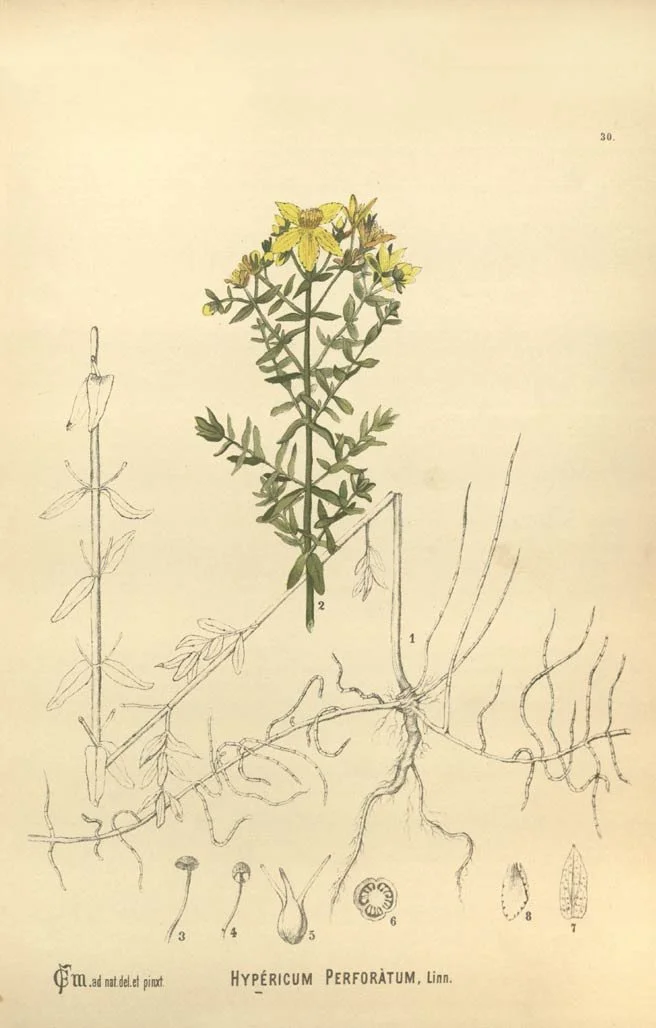
St. John’s Wort (Hypericum perforatum) is one of the most well-known medicinal herbs in the world, particularly for its traditional use in supporting mood, emotional well-being, and mild stress.
With its bright yellow flowers and long history of herbal use, St. John’s Wort has become especially associated with herbs that help bring a little more light and balance to the body and mind.
Native to Europe and now naturalized throughout many parts of North America, St. John’s Wort can often be found growing in sunny fields, meadows, and along roadsides. The flowering tops are traditionally harvested during the summer months, when the plant is in bloom.
In traditional herbalism, St. John’s Wort is viewed as an uplifting, balancing, and supportive herb, but it is also an herb that deserves particular respect because it can significantly affect how the body processes medications.
Meet St. John’s Wort
Scientific Name:Hypericum perforatum
Also Known As: Hypericum, Klamath Weed, Goatweed
Where It Grows: Native to Europe and naturalized in North America. It commonly grows in sunny meadows, fields, grasslands, and along roadsides.
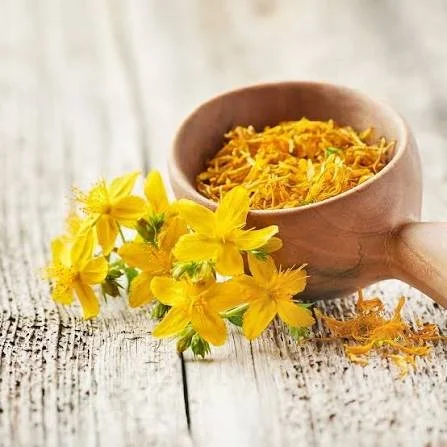
Part Used: Primarily the flowering tops
Harvest: Traditionally harvested during the summer when the plant is flowering.
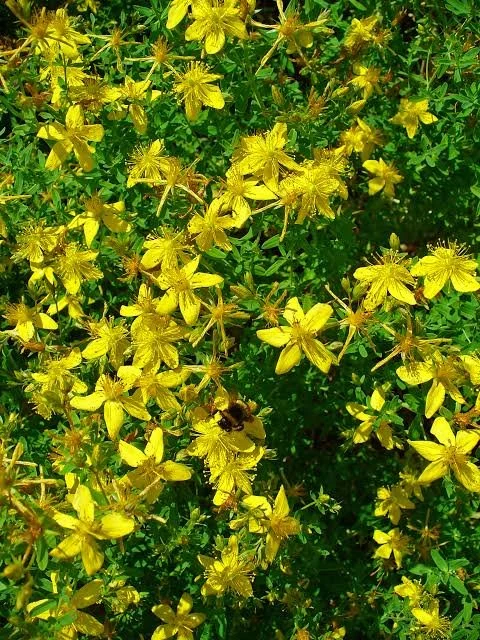
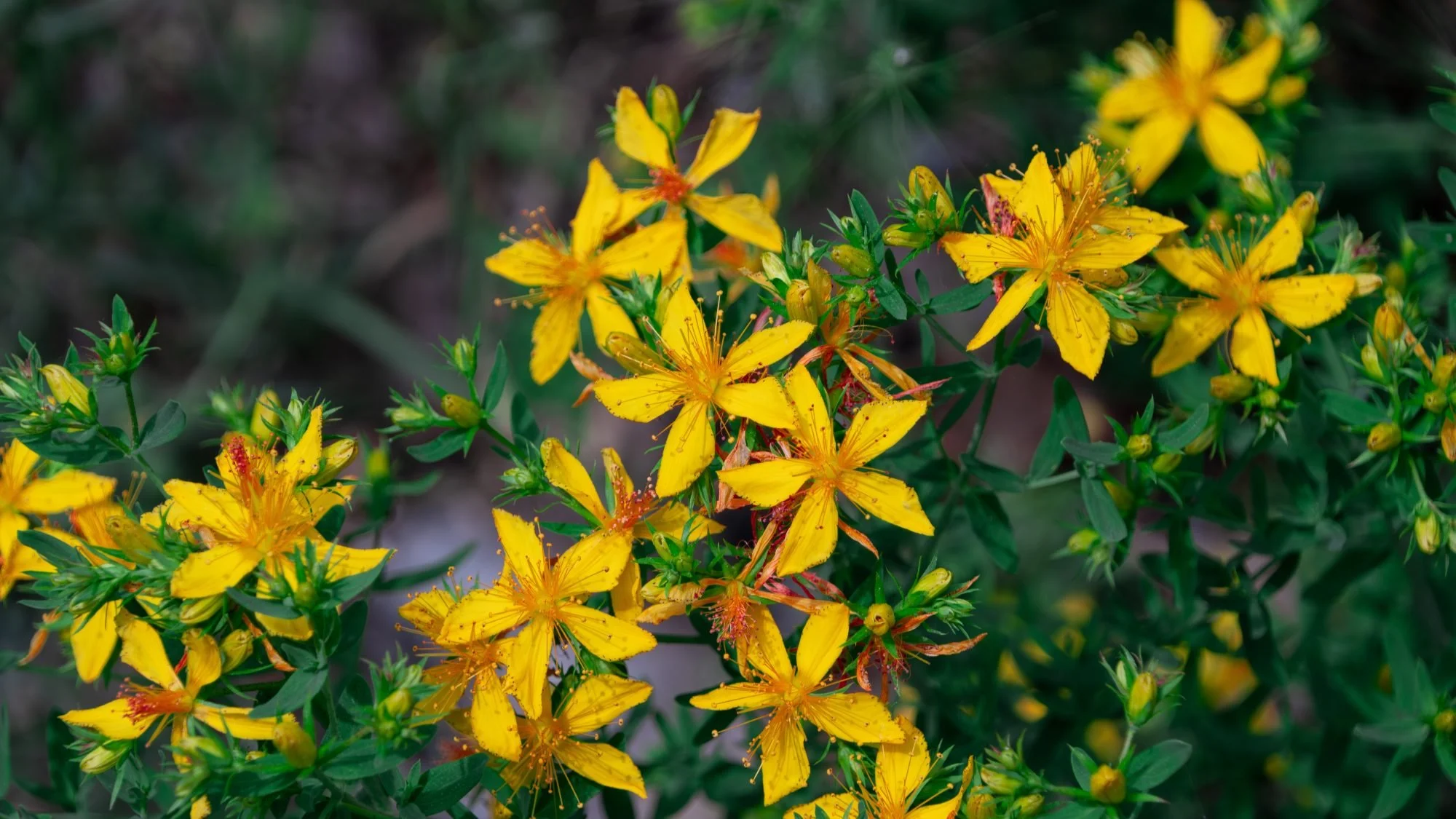
St. John’s Wort is recognizable by its bright yellow, five-petaled flowers. When the flowers or leaves are crushed, they can release a reddish-purple pigment — one of the characteristics that has made this plant especially interesting to herbalists throughout history.
Traditional Uses & Benefits
Supports Mood & Emotional Well-Being
St. John’s Wort is best known for its traditional use in supporting mood and emotional well-being.
It has been extensively studied for its potential role in supporting people experiencing mild to moderate depressive symptoms, although it is important to distinguish traditional herbal use from treatment of clinical depression.
Its active plant compounds, including hypericin and hyperforin, are believed to contribute to its effects on several neurotransmitter and signaling systems.
If someone is experiencing persistent, severe, or worsening depression, St. John’s Wort should not be used as a substitute for professional mental-health care.
Traditional Stress Support
Traditionally, St. John’s Wort has been used as a nervine and emotional-supportive herb, particularly during periods of mild stress, emotional tension, or feeling "run down."
Its uplifting qualities have made it a popular herb in traditional herbalism for supporting a more balanced emotional state.
Traditional Antiviral Properties
St. John’s Wort has also demonstrated antiviral activity in laboratory and experimental settings, which has contributed to its traditional interest as a supportive medicinal herb.
However, laboratory antiviral activity does not necessarily mean that taking St. John’s Wort will treat or prevent a viral infection in humans.
Traditional Skin Support
St. John’s Wort has a long history of external use in herbal preparations, particularly infused oils and salves.
The flowering tops are traditionally infused into oil, producing a characteristic reddish-colored herbal oil that has been used in traditional herbalism for minor skin irritation, bruising, and everyday skin support.
This is one of the ways St. John’s Wort can be incorporated into a home herbal apothecary without using it internally.
St. John’s Wort's Energetic & Holistic Properties
St. John’s Wort has long carried a reputation as an herb of light and protection.
Its bright yellow flowers bloom during the height of summer, and traditional European herbal practices associated the plant with bringing light into dark or difficult seasons.
Energetically, St. John’s Wort is often described as:
Uplifting
Balancing
Protective
Emotionally supportive
Strengthening
Light-bringing
From a holistic perspective, it is often viewed as an herb that supports resilience when someone feels emotionally depleted, overwhelmed, or weighed down.
Ways to Use St. John’s Wort
St. John’s Wort Tea
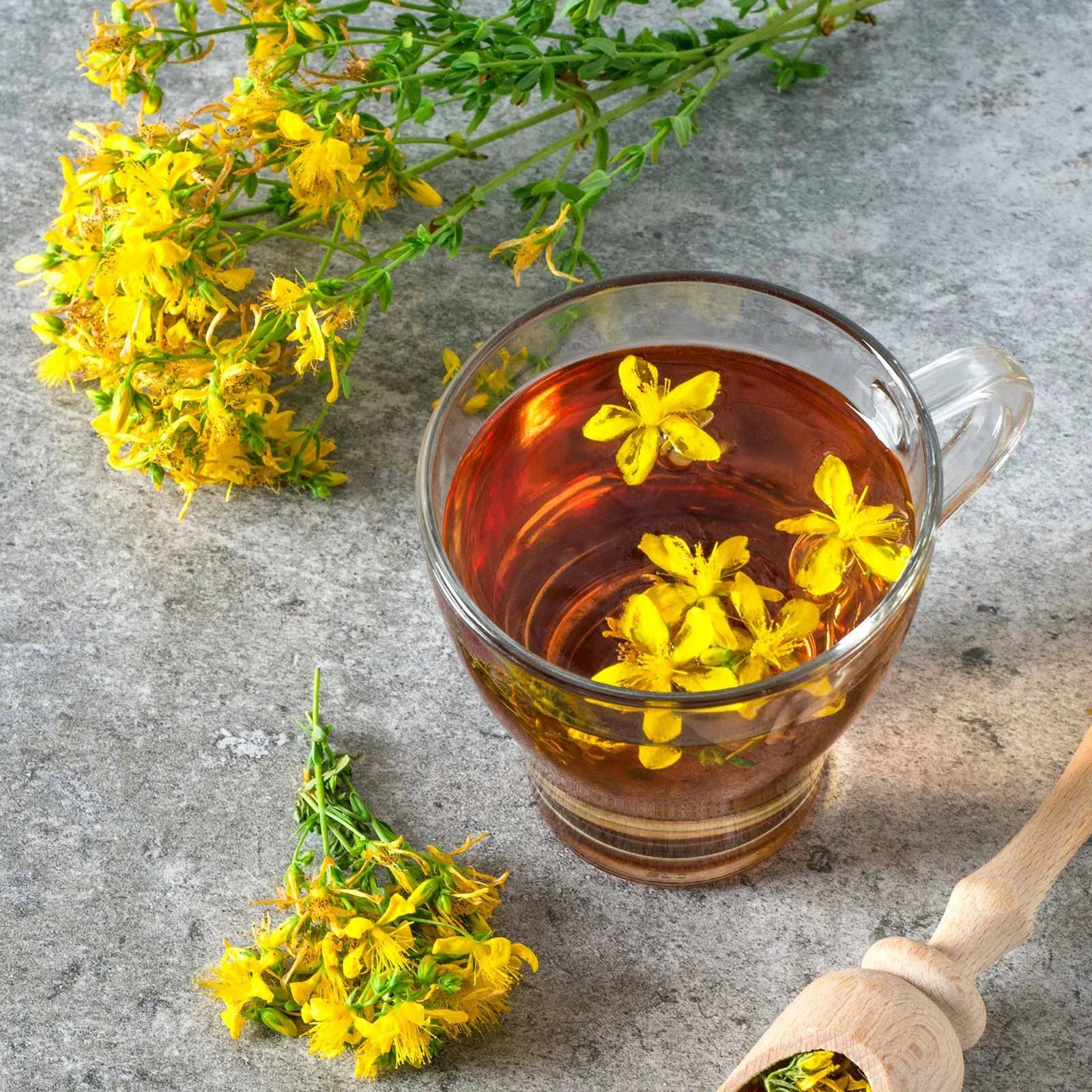
The dried flowering tops can traditionally be prepared as an herbal tea.
Basic preparation:
1–2 teaspoons dried St. John’s Wort
8–12 oz hot water
Steep for approximately 10 minutes
Strain and enjoy
Because St. John’s Wort can interact with numerous medications, internal use should be discussed with a qualified healthcare professional or knowledgeable herbal practitioner before beginning, especially if taking prescription or over-the-counter medications.
Herbal Tincture
St. John’s Wort is traditionally prepared as an alcohol-based tincture using the flowering tops.
Tinctures provide a concentrated way to work with herbs, but because of St. John’s Wort's extensive drug-interaction profile, internal tincture use should be professionally guided.
St. John’s Wort Infused Oil
One of the most beautiful traditional preparations is St. John’s Wort infused oil.
Fresh flowering tops are traditionally infused into a carrier oil, producing a deep red herbal oil. This preparation can be incorporated into salves and other topical products for traditional skin support.
Important: St. John’s Wort can increase sensitivity to sunlight. This photosensitizing effect is particularly important with internal use, but caution with significant sun exposure is also appropriate when using concentrated topical preparations.
St. John’s Wort in the Herbal Apothecary
St. John’s Wort is a wonderful example of an herb that can be used in multiple ways — internally for traditional mood support and externally in oils and salves.
Its beautiful yellow flowers make it a meaningful addition to an herbal garden, while its infused oil can become a useful ingredient in a natural home apothecary.
If you grow your own, harvest the flowering tops while the plant is actively blooming and dry them carefully for tea or other preparations.
Growing St. John’s Wort
St. John’s Wort is a hardy perennial that thrives in:
Full sun
Well-drained soil
Moderate water
It can spread aggressively in some environments, and in certain regions it is considered an invasive or noxious weed. Check your local regulations before intentionally cultivating or releasing it.
The flowering tops are traditionally harvested in summer when the plant is in full bloom.
Safety & Medication Interactions
This is one herb where safety deserves extra attention.
St. John’s Wort can substantially increase the activity of certain liver and intestinal enzymes and transport proteins involved in medication metabolism. As a result, it can lower the effectiveness of many medications.
Potential interactions include:
Antidepressants and other psychiatric medications
Hormonal birth control
Blood thinners and certain anticoagulants
Organ-transplant medications
Certain HIV medications
Some cancer medications
Certain seizure medications
Some heart medications
Other medications metabolized through CYP enzymes or affected by P-glycoprotein
One particularly important concern is combining St. John’s Wort with medications that increase serotonin. This combination can potentially contribute to serotonin syndrome, which can be a medical emergency.
St. John’s Wort may also cause increased sensitivity to sunlight, particularly at higher doses.
Because of its extensive interaction profile, do not start St. John’s Wort internally without first reviewing your medications and supplements with a qualified healthcare professional or pharmacist.
Pregnant and breastfeeding individuals should also seek professional guidance before using St. John’s Wort.
As always, natural does not automatically mean risk-free. St. John’s Wort is a powerful herb, and it should be used thoughtfully.
St. John’s Wort in Your Herbal Medicine Cabinet
St. John’s Wort is a beautiful example of an herb with a long history of traditional use and a fascinating range of properties.
From its bright summer flowers to its traditional role as an uplifting and emotionally supportive herb, St. John’s Wort has earned an important place in herbal traditions around the world.
It can be especially interesting to explore as part of a whole-person approach to emotional wellness, where herbs are combined with nourishing food, adequate sleep, movement, time outdoors, nervous-system support, and healthy connection.
But this is also an herb where knowledge matters. Its ability to influence how the body processes medications means that it should never be treated as an ordinary "take-as-needed" herb.
Respect the plant, understand the interactions, and use its medicine wisely.
HERB SPOTLIGHT
St. John’s Wort
Hypericum perforatum
Traditional Actions: Mood support • Nervine • Stress support • Traditional antiviral activity • Topical skin support
Energetics: Uplifting • Balancing • Protective • Supportive
Part Used: Flowering tops
Primary Preparations: Tea • Tincture • Infused oil • Salve
Best Known For: Traditional support for mood and emotional well-being
Safety: Significant medication interactions. May reduce the effectiveness of hormonal birth control and numerous prescription medications. May interact dangerously with serotonergic medications. May increase sun sensitivity. Consult a qualified healthcare professional before internal use.